

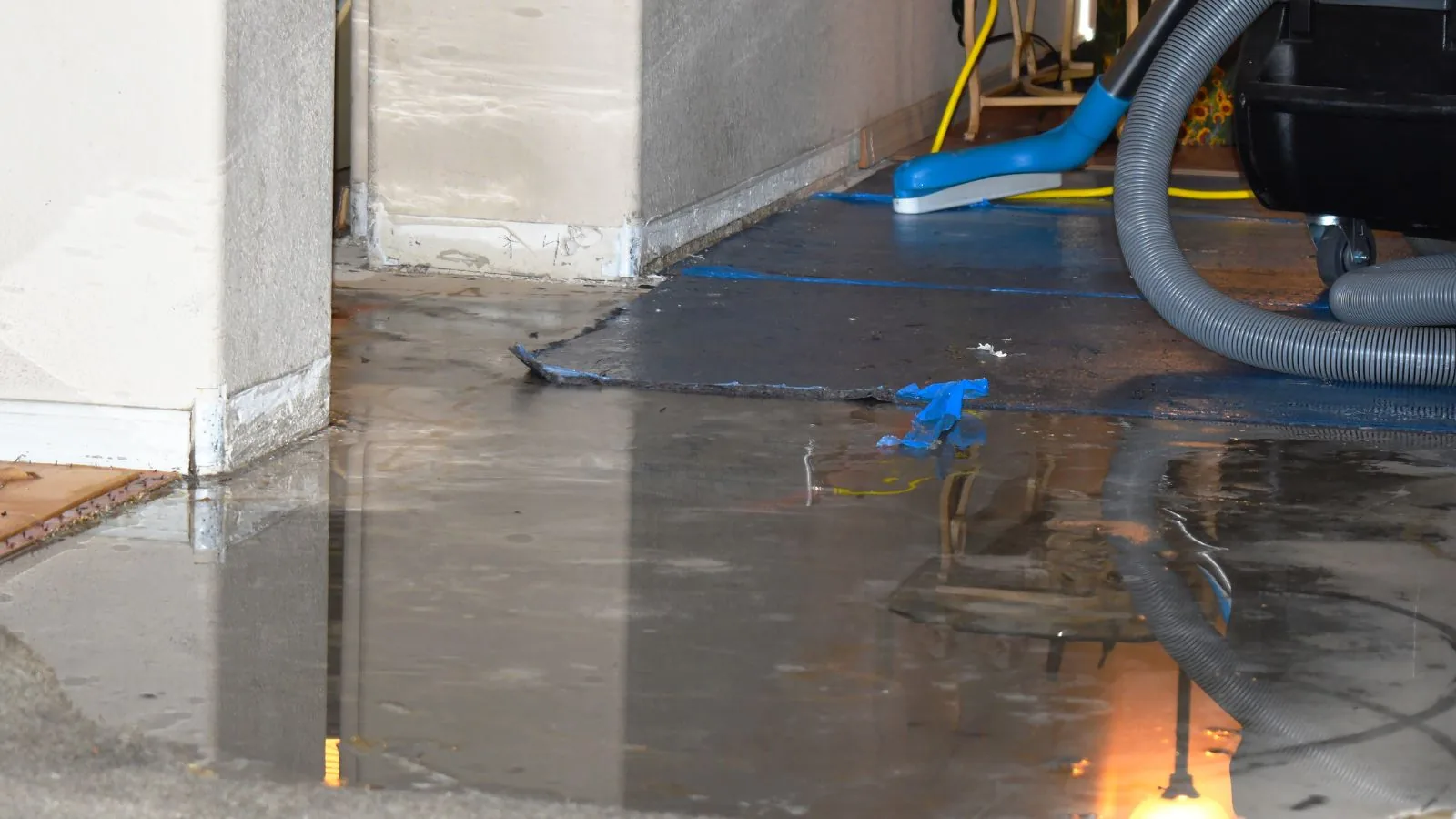
Why Standing Water Has To Come Out First
Water does not stay where it lands. In a wood-framed house it moves sideways under baseboards, down into subfloors and up into drywall by wicking. Every hour it sits, more material gets wet, and wet material takes longer to dry and costs more to fix.
Extraction is the step that removes the liquid itself. Dehumidifiers and air movers are built to handle moisture in the air and in surfaces, not an inch of water on a floor. Pumping and vacuuming first lets the drying equipment work on what is left.
That is why the first call matters. Whether the water came from a split supply line, a failed washing machine hose or a storm, the same rule applies. Get the bulk water out, then measure what stayed behind.
What To Do Before A Crew Arrives
A few safe steps protect people and belongings while you wait. None of them replace professional extraction, and none of them should put you near live electrical gear.
- Shut off the water at the source if you can reach the valve safely, starting with the main valve.
- Stay out of rooms where water touches outlets, power strips or appliances, and leave breakers alone if you must wade to reach them.
- Lift small items, shoes and papers onto dry counters or shelves.
- Photograph the water line on walls and furniture before anything moves.
- Open interior doors so air can move, but skip fans if the water may be contaminated.
How Emergency Water Extraction Works
The method depends on the surface. Hard floors and tile take a squeegee-style wand on a truck-mounted or portable extraction unit. Carpet is worked with a weighted wand that presses water out of the fibers and the pad underneath. Deep water is pumped first, then the floor is vacuumed.
After the visible water is gone, readings come next. A pin-type moisture meter checks wood and drywall at set heights. A thermal imaging camera shows cool, wet areas behind finished surfaces. A hygrometer records air temperature and humidity so the drying plan has a starting point.
The published ANSI/IICRC S500 standard is the reference most professionals use for water damage work, including how to sort water by category and how to set drying goals. It is a guide to the process, and it is why a log of readings matters.
| Situation | Usual method | What it protects |
|---|---|---|
| Inch or more of standing water on hard floor | Submersible pump, then wand extraction | Subfloor and baseboard from wicking. |
| Soaked carpet over pad | Weighted wand extraction, pad lifted if needed | The room from lingering dampness and odor. |
| Water in a finished basement | Pump down in stages, then extract and dry | Foundation walls and stored belongings. |
| Small spill under a fixture | Wet vacuum and targeted drying | Cabinet bases and flooring edges. |
Water on the floor right now?
Call the emergency line. Describe the source, the depth and which rooms are wet.
When Extraction Is Not Enough On Its Own
Extraction removes liquid. It does not dry the structure. After water is pulled off the floor, wall cavities, subfloors and framing still hold moisture. That is where structural drying and dehumidification takes over, with air movers and LGR dehumidifiers running until readings reach the drying goal.
If the water came from a sewer line or floodwater, the job changes. Porous materials that touched that water may need removal instead of drying, and a sewage backup cleanup plan sets the safety steps first.
What Changes The Cost Of Extraction
Price depends on facts that are found on site, so it cannot be set over the phone. Scope and price are explained before work starts.
- How much water there is and how deep it sits.
- Which floors and materials are wet, and how many rooms.
- Whether carpet pad, baseboard or drywall must come out.
- How long the water sat before the call.
- Access to the area, such as stairs, crawl spaces or finished basements.
- Whether the water is clean, gray or contaminated.
Insurance And Extraction
Many homeowners policies cover sudden water losses from inside the home, such as a burst pipe, and exclude flood water and most sewer or drain backup unless an endorsement was added. Oregon's Division of Financial Regulation explains these limits on its storm and water damage page. Photos and a moisture log help any claim. Your insurer decides coverage.
Water Extraction Across Wilsonville
Calls come from every part of the 97070 ZIP code, from older homes near Old Town to newer streets in Villebois and the Charbonneau district south of the river. Newer homes often hold water in finished basements and bonus rooms, while older ones tend to show it first at baseboards and crawl space edges. Crews also work in Sherwood and Canby.
Emergency Water Extraction Questions
Is emergency water extraction available in Wilsonville?
Yes. The emergency line is open 24/7 for Wilsonville, ZIP 97070, and nearby towns. Same-day response is offered when available. Call, describe where the water is, and you will be told what happens next.
How soon should water be removed after a leak?
As soon as it is safe. Wet drywall and subfloors start absorbing right away, and the longer water sits the more material has to be dried or replaced. Calling the same day is the best way to limit damage.
Can I use a shop vacuum myself?
For a small clean spill, yes. A household wet vacuum does not move enough water for a flooded room, and it should never be used if water is near outlets or could be contaminated.
Do you pull up the carpet during extraction?
Sometimes. Clean water in a newer carpet can often be extracted in place. Pad that stays wet, or carpet touched by contaminated water, usually has to be lifted so the floor beneath can dry.
What happens after the water is gone?
Moisture readings are taken, then drying equipment is set to bring walls and floors to a dry standard. Readings are repeated until the structure reaches its drying goal, and then repairs can begin.