

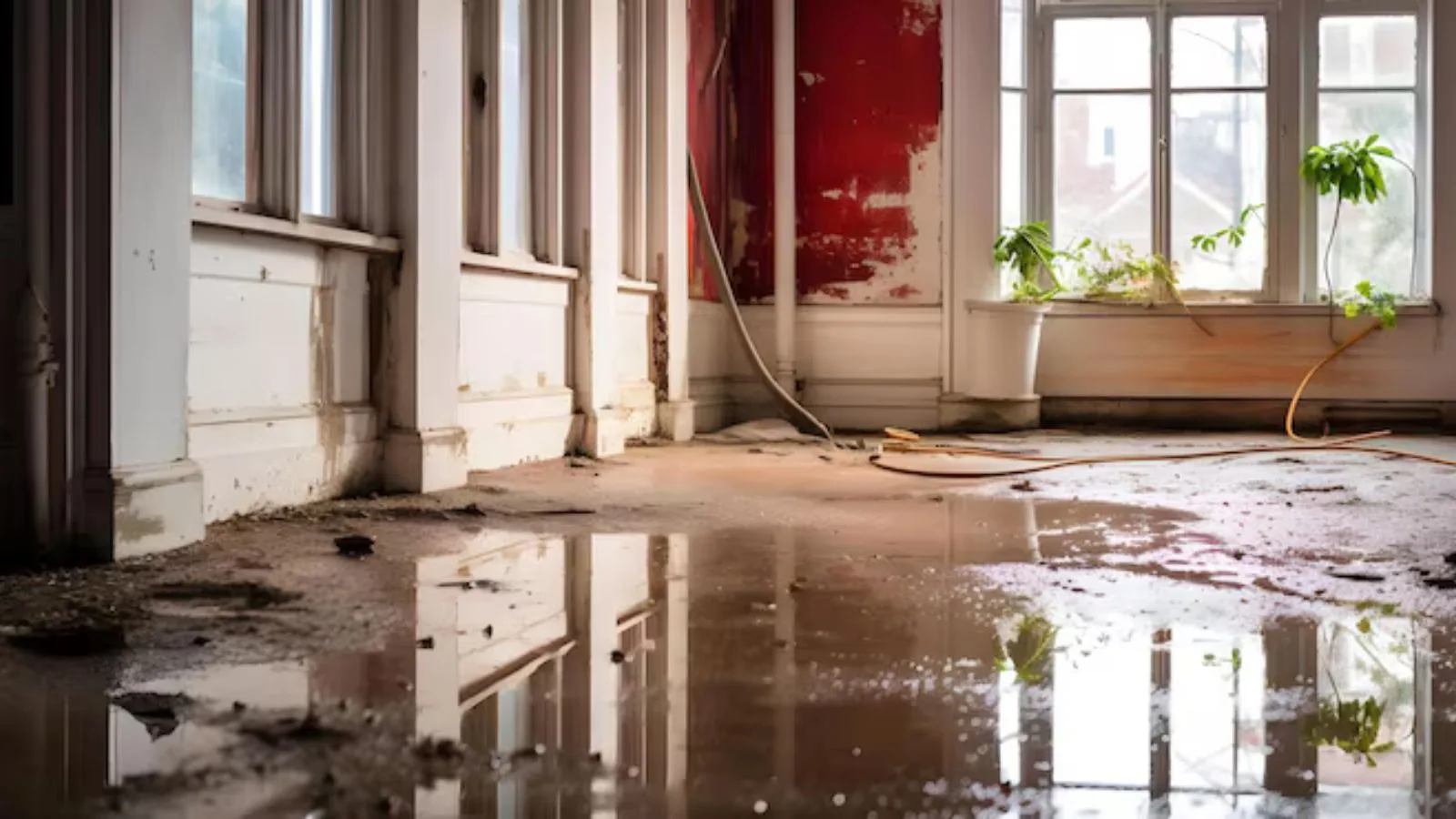
Why Flood Water Is Treated Differently
Flood water has crossed ground, drains and roads before it reaches a home. That is why the ANSI/IICRC S500 guide treats water from outside as heavily contaminated. Carpet, pad, insulation and drywall that soaked in it are usually removed and replaced, not simply dried.
Clean-water leaks from a supply line start in a cleaner category. Flood water does not, which means different protective gear, different cleaning steps and a firmer line on what can stay.
What To Do Before A Crew Arrives
- Stay out of the water if outlets, cords or appliances are under it.
- Shut off power at the panel only from a dry spot, or leave it for the crew.
- Avoid wading through flood water without boots and gloves, and wash after contact.
- Do not run household fans or a heating system in a flooded space.
- Take photos of the water line, damaged items and the outside of the house.
- Keep children and pets out of the area.
Flood Risk Around Wilsonville
Wilsonville sits on the north bank of the Willamette River, and creeks such as Boeckman Creek and Coffee Lake Creek drain parts of the city. Whether a specific address is in a mapped flood zone is a question for the FEMA Flood Map Service Center, which shows flood zones by address. Do not rely on memory or neighbors for that.
The city has also worked on stormwater changes near Boeckman Road, where development in the early 1980s redirected runoff toward Boeckman Creek, according to the city's Engineering page. Ask the city's Engineering or Building staff about drainage on your street.
How Flood Restoration Is Done
Water is pumped and extracted first. Then crews remove materials that cannot be safely dried, such as soaked carpet pad, insulation and the lower part of drywall, cutting above the visible water line. Hard surfaces are cleaned and treated with an antimicrobial, and the structure is dried with air movers and LGR dehumidifiers.
Moisture meters and thermal imaging check walls and floors, and readings are logged until the drying goal is reached. Contents are sorted into what can be cleaned and what cannot.
| Material | Usual outcome | Reason |
|---|---|---|
| Carpet and pad | Removed | Soaked pad holds contaminants and stays wet. |
| Drywall below the water line | Cut out | Absorbs water and is hard to sanitize. |
| Fiberglass insulation | Removed | Holds water and contaminants. |
| Solid wood framing | Cleaned and dried | Dries when opened and treated. |
| Concrete and tile | Cleaned and dried | Non-porous or low-porosity surfaces. |
Water coming in from outside?
Call the emergency line. Describe the water level and whether power is still on.
What Flood Cleanup Costs Depend On
- Water depth and how many rooms were reached.
- How long the water stayed in the house.
- The amount of carpet, drywall and insulation that must be removed.
- Contents cleaning and disposal volume.
- Drying time and the amount of equipment.
- Whether power must be restored before drying.
Scope and price are explained before work starts.
Flood Coverage And Insurance
This is the most important insurance point on this page. The Oregon Division of Financial Regulation states that most homeowners policies exclude flood, and that flood coverage is available through the National Flood Insurance Program. The program has a 30-day waiting period, so it must be bought before the water arrives. Your insurer decides coverage.
Flood Help Near Wilsonville
Service covers ZIP 97070 and nearby towns. Floods along the Willamette, Molalla and Pudding rivers have affected Canby and Aurora too, and Clackamas County records show the Canby Ferry was closed by severe flooding in February 1996. Related pages cover basement water damage and storm water damage cleanup.
Flood Damage Questions
Is emergency flood cleanup available in Wilsonville?
Yes. The emergency line is open 24/7 for Wilsonville, ZIP 97070, and nearby towns. Same-day response is offered when available. Call and describe the water level, the source and whether power is still on.
Does homeowners insurance cover flood damage?
Usually not. Oregon's insurance regulator says most homeowners policies exclude flood. A separate flood policy, such as one through the National Flood Insurance Program, is needed, and it has a 30-day waiting period.
Why is flood water treated as contaminated?
It has passed over ground, drains and roads, so it can carry bacteria and chemicals. The S500 guide classes water from outside as heavily contaminated, which changes protective gear and what can be kept.
Can wet carpet be saved after a flood?
In most flood cases the carpet and pad are removed. Contaminated pad cannot be reliably cleaned, and carpet that stayed wet for long is usually discarded.
How do I check whether my address is in a flood zone?
Search the FEMA Flood Map Service Center by address. For local drainage questions, contact the City of Wilsonville Engineering or Building staff. Do not rely on memory or neighbors.