

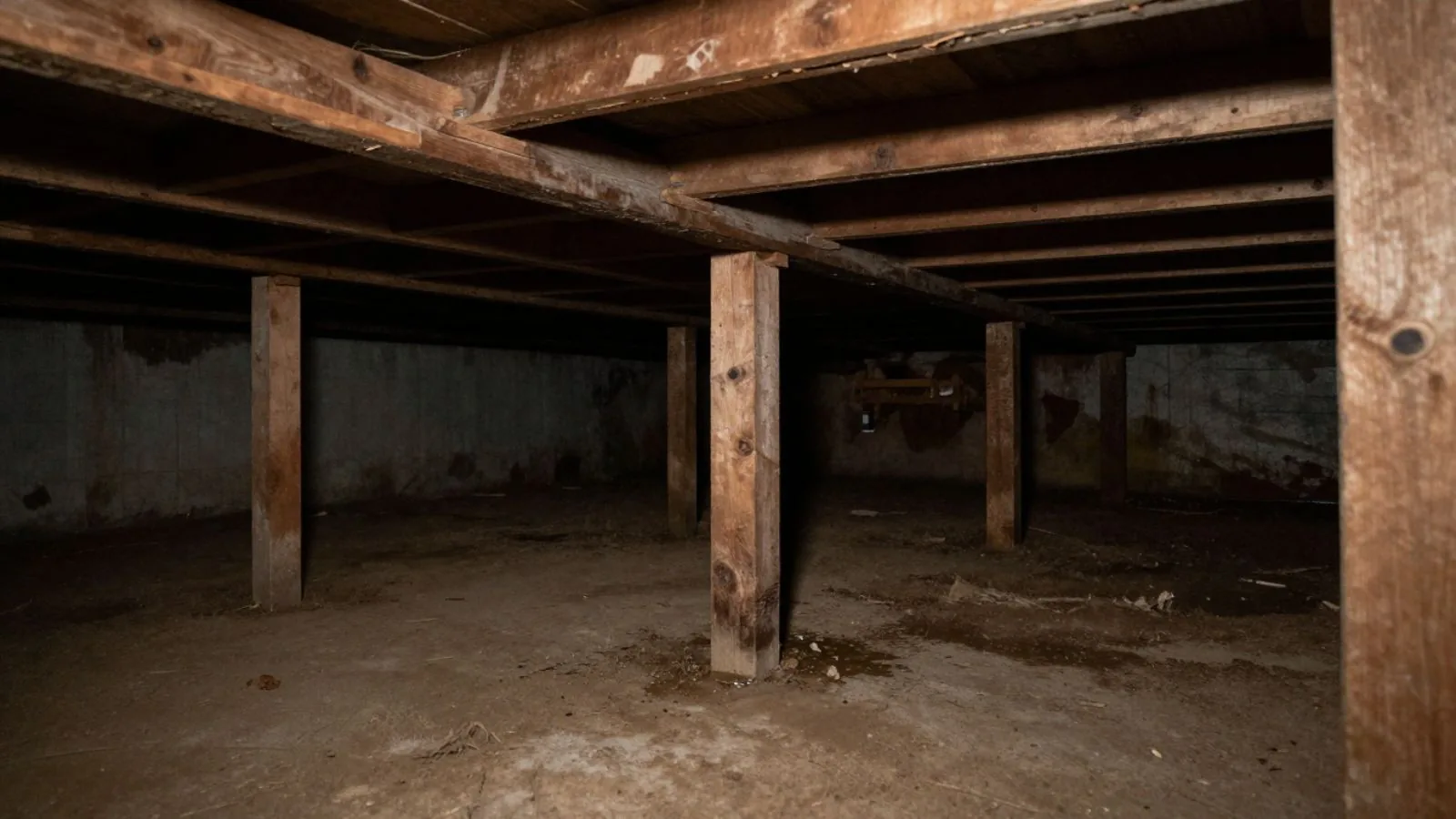
Signs Of Water In A Crawl Space
- Floors that feel soft, bouncy or cold near walls.
- A musty smell that rises through vents.
- Insulation sagging between joists.
- Standing water or damp soil visible at the access hatch.
- Pooling near foundation vents after heavy rain.
- Condensation on pipes and ductwork.
A crawl space is a short space between the ground and the first floor. It holds pipes, ducts and the subfloor. Wet there is a risk to all three.
Where The Water Comes From
Sources are plumbing leaks, surface runoff, groundwater and condensation. A burst line drips onto the vapor barrier. Roof gutters that discharge near the foundation send rain toward it. High groundwater can rise in wet seasons, and humid air meeting cool surfaces produces condensation.
Crawl spaces are not universal here. Homes in Wilsonville use slabs, crawl spaces and basements, and no public figure shows which is most common. If your house has a crawl space, treat its moisture as a hidden risk.
What To Do Before A Crew Arrives
- Stay out of a space with standing water until power is confirmed off to any wiring.
- Turn off the main water if a pipe is the source.
- Look at gutters and downspouts for water discharging at the foundation.
- Take photos from the hatch with a flashlight.
- Avoid entering with open sores or without a mask if the space smells foul.
How Crawl Space Cleanup Works
Water is pumped from low points. Wet batt insulation is removed because it holds moisture against the subfloor. Joists and subfloor boards are read with a pin-type moisture meter, since wood must reach a dry standard before it is covered again.
Dehumidifiers and air movers are set up through the access point. The goal follows the ANSI/IICRC S500 guide. A vapor barrier on the ground is checked, and gaps are noted so the repair plan can address them.
| Source | How to recognize it | Typical fix |
|---|---|---|
| Plumbing leak | Drips on the barrier, wet insulation below one spot | Repair the line, dry the area. |
| Gutter or grading | Water near vents after rain | Extend downspouts, correct grading. |
| High groundwater | Water at the same level in wet months | Sump or drainage system by a specialist. |
| Condensation | Beads on cold pipes and ducts | Dehumidify, insulate pipes, seal the barrier. |
Water under the house?
Call the emergency line. Say what you can see from the hatch.
Preventing Repeat Wetness
A ground vapor barrier, sealed foundation openings where appropriate and working gutters lower the risk. Some crawl spaces use sump pumps or dehumidifiers. These are building decisions made with a specialist, and the water damage crew can point out what the readings suggest.
Cost Factors
- The volume of water and how hard it is to pump.
- Insulation and vapor barrier that must be replaced.
- Access conditions, since low height slows work.
- Drying equipment days.
- Repairs to plumbing or drainage that caused the water.
Scope and price are explained before work starts.
Insurance Notes
Insurers usually cover sudden plumbing leaks and often exclude groundwater that seeps through foundations. The Oregon Division of Financial Regulation lists below-ground water as a common exclusion. Your insurer decides coverage.
Crawl Space Water In Wilsonville
The Willamette and its creeks shape drainage across the area, so it is worth asking the city about drainage on your street. Service covers ZIP 97070, Aurora and Canby, where homes near the Pudding and Molalla rivers may deal with high groundwater. See structural drying for how framing is dried.
Crawl Space Water Questions
Is crawl space water cleanup available in Wilsonville?
Yes. The line is open 24/7 for Wilsonville, ZIP 97070, and nearby towns. Same-day response is offered when available. Call and describe what you see from the hatch.
How do I know if my subfloor is wet?
Soft spots, cupping floors and a musty smell are signs. A moisture meter on the joists and subfloor gives actual readings.
Should wet insulation come out?
Usually yes. Wet batts hold moisture against the wood and do not dry well in place.
Do I need a sump pump?
Not every crawl space does. If groundwater returns each wet season, a specialist can advise on drainage or a pump.
Can crawl space moisture raise humidity inside the house?
Yes. Moisture moves up through the floor, so a damp crawl space can raise indoor humidity and odors.