

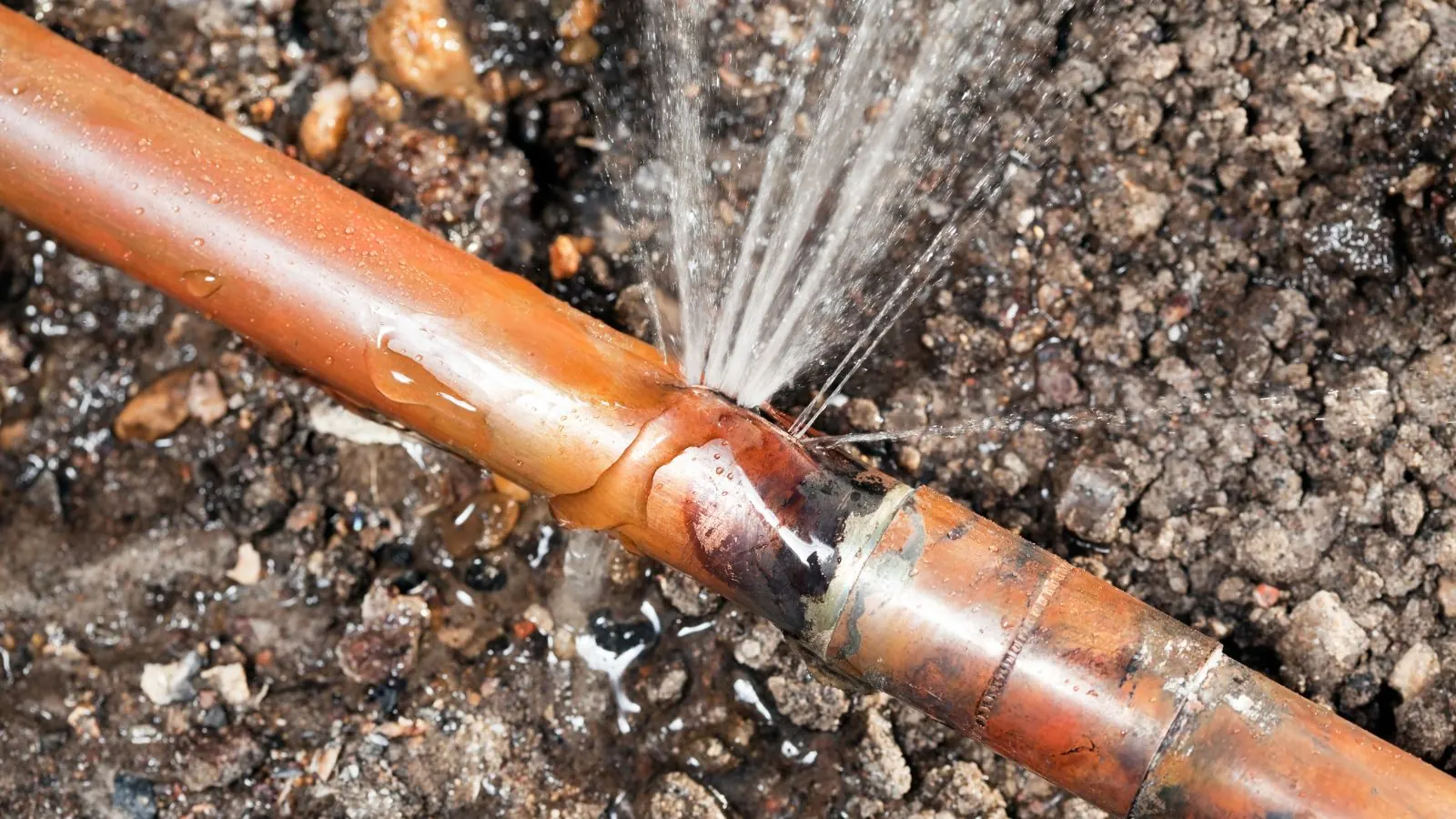
What To Do In The First Minutes After A Pipe Bursts
The most useful thing you can do is stop the supply. Find the main shutoff valve, usually where the line enters the house or near the meter, and turn it fully off. Then open a lowest faucet to let pipes drain and relieve pressure.
If water is falling through a ceiling or touching light fixtures, stay clear. Do not flip switches in wet rooms. If it is safe to reach the panel, turn off power to the affected area, and if it is not, call the emergency line and say so.
- Close the main water valve, or the nearest isolation valve to the break.
- Switch off power to wet rooms only if you can do it from a dry spot.
- Move valuables, rugs and small furniture off wet floors.
- Take photos and short video of the source and every wet surface.
- Call for help and report where the water is and how long it ran.
What Usually Causes A Burst Supply Line
Pipes fail at joints, fittings and spots weakened by age, corrosion or pressure. In Wilsonville the city delivers treated water from the Willamette River treatment plant, and household pressure then depends on your pressure regulator and fixtures. A failing regulator, a stiff shutoff or a loose coupling can all let a line fail.
Cold snaps cause some breaks too, covered on the frozen pipe water damage page. Appliance supply hoses and water heater connections are common weak points as well, and they have their own pages for appliance leak water damage and water heater leak cleanup.
How Burst Pipe Cleanup Proceeds
After the water is off, the first job is extraction of anything standing. Then moisture is mapped with a pin-type meter and a thermal imaging camera, because water from a burst line often runs along joists and pools in rooms far from the break.
Wet drywall, insulation and baseboard are opened where readings show water trapped behind them. Air movers and LGR dehumidifiers then run in a closed room until the readings come down to the drying goal. A plumber repairs the pipe itself, and the repair can happen alongside drying.
| Break location | Where water travels | What to check |
|---|---|---|
| Wall supply line | Down the cavity into the floor plate and subfloor | Baseboards, drywall base, flooring edges. |
| Ceiling or attic line | Through insulation, then drywall, then the room below | Ceiling stains, light fixtures, wall tops. |
| Crawl space or under-slab line | Along framing, or up through flooring | Floor warping, musty smell, cold spots. |
| Basement ceiling line | Floor joists, then the finished area below | Subfloor, carpet, stored items. |
Burst pipe in the house?
Call the emergency line now. Say where the break is and whether the water is off.
Do Not Wait To Dry The Structure
Surface drying with towels leaves most of the moisture behind. Water in wall cavities and under flooring can stay wet long after the room feels dry. A structure that stays damp invites odor and material failure, so measured drying is part of the job from the start.
The ANSI/IICRC S500 standard is the published guide for sorting water by category and setting drying goals. For a burst clean-water supply line, the water starts in the cleanest category and can degrade the longer it sits, which is another reason speed matters.
What Affects Burst Pipe Cleanup Cost
- How long the pipe ran before the water was shut off.
- The number of rooms and floors the water reached.
- Whether ceilings, drywall, insulation or flooring must come out.
- How many air movers and dehumidifiers the drying plan needs.
- The number of days the equipment must run to reach the drying goal.
- Whether the plumber's repair opens more of the wall.
Scope and price are explained before work starts, after the damage has been measured.
Insurance For A Burst Pipe
Sudden, accidental discharge from a plumbing system is often a covered cause under a homeowners policy, though terms differ. Oregon's Division of Financial Regulation offers free claim help. Keep photos, receipts and the plumber's report, and ask your insurer what it needs. Coverage is decided by your insurer.
Burst Pipes In Wilsonville Neighborhoods
Homes in Old Town, Villebois and the Charbonneau district were built in different decades and carry different pipe materials and routing. Wilsonville's Building Division notes that altering piping inside a wall or beneath a floor requires a plumbing permit, so ask the plumber whether the repair needs one. Service also reaches Sherwood and Canby.
Burst Pipe Questions
Is emergency burst pipe service available in Wilsonville?
Yes. The emergency line is open 24/7 for Wilsonville, ZIP 97070, and nearby towns. Same-day response is offered when available. Call after you shut off the water, and describe the source and the wet areas.
Should I turn off the electricity after a burst pipe?
Only if you can reach the panel from a dry spot and the wet area is small. If water is near outlets, fixtures or the panel itself, stay out and report it when you call.
How long does drying take after a burst pipe?
It depends on how much water, which materials are wet and the conditions in the house. Drying is measured with moisture readings and ends when they reach the drying goal, often over several days.
Can I stay in the house during cleanup?
Often yes for a contained clean-water loss, though noise and equipment fill several rooms. If water reached bedrooms, ceilings are sagging or power is affected, plan to stay elsewhere until it is safe.
Will wet drywall have to be replaced?
Not always. Drywall that is lightly wet and dries to its goal can stay. Sagging, soft or stained board, and board that sat in water for long, is usually cut out and replaced.