

Damp Walls, Musty Air Or Floors That Will Not Dry? Why Fans Are Not Enough
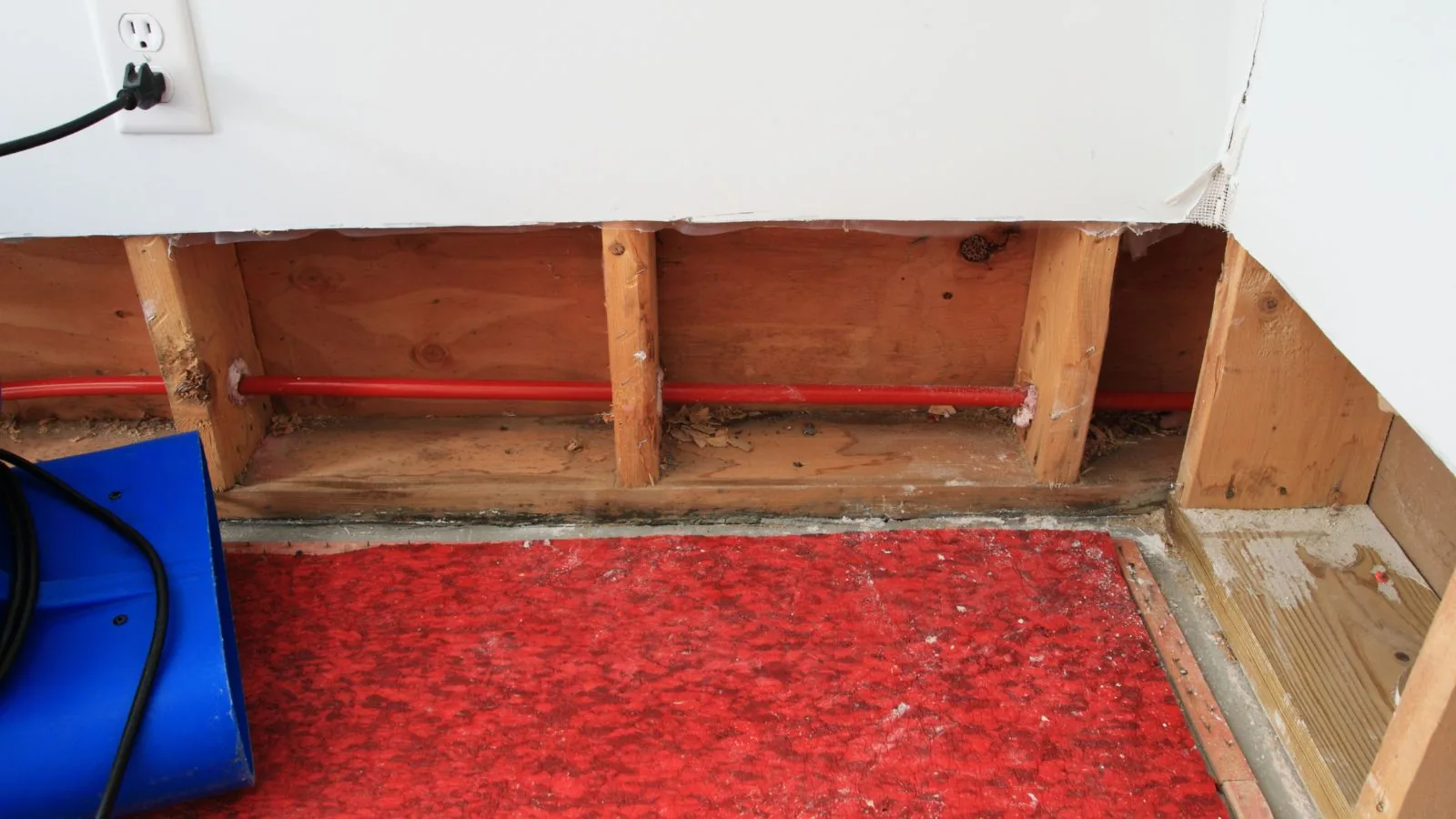
After a leak, a house can look dry and still hold water. Signs include a musty smell, paint that bubbles, baseboards that swell and floors that feel cool or sticky. Window fans and household dehumidifiers rarely move enough moisture out of wall cavities and subfloors.
Structural drying is a controlled process. Equipment is chosen and placed using the size of the space, the materials and the readings. This is what water mitigation means, and it is the work that follows extraction and comes before repair.
How Structural Drying Works
Moisture leaves materials as vapor. Air movers push dry air across wet surfaces to release it, and dehumidifiers remove the vapor from the air so it does not settle back. If humidity stays high, drying stalls.
LGR dehumidifiers, short for low grain refrigerant, keep working in the cool, humid conditions common after a leak. Desiccant units are used in some cold spaces. Air movers are placed to push air along walls and floors, and wall cavities can be dried through small openings or by removing baseboard.
Measured Readings Set The Plan
Drying is not guesswork. A pin-type moisture meter reads wood and drywall. A thermal imaging camera shows temperature patterns that hint at hidden water. A hygrometer records temperature and relative humidity, and psychrometric readings tell the crew whether the air can take on more moisture.
The ANSI/IICRC S500 standard is the published guide for water damage work. It describes how to set a dry standard, take readings and log them each visit. That log is also what insurers often ask for.
| Equipment | Job | Where it is used |
|---|---|---|
| Axial air mover | Moves a high volume of air across surfaces | Floors, walls and carpet. |
| Centrifugal air mover | Pushes air along a narrow line | Under cabinets, in wall cavities. |
| LGR dehumidifier | Removes vapor from the air | Closed rooms and whole floors. |
| Desiccant dehumidifier | Dries air in cold conditions | Unheated crawl spaces and attics. |
| Floor drying mat system | Pulls water from hardwood or subfloor | Tight wood floors. |
House still damp after a leak?
Call the emergency line. Say what was wet and when.
What To Do Before A Crew Arrives
- Close the room or zone so air can be controlled.
- Do not run household fans if the water was contaminated.
- Remove loose rugs, boxes and small items from wet floors.
- Keep the thermostat steady and note any new smells.
- Photograph the wet area and take a quick humidity reading if you have a hygrometer.
- Do not start repairs or paint until readings show dry.
How Long Drying Takes
Most structural drying runs for several days, with readings each visit. The time depends on the materials, how much water soaked in and the conditions inside the house. Dense materials such as hardwood and framing dry slowly. A single reading is not proof of dryness, so readings are repeated until they reach the goal.
Equipment is not removed when a surface feels dry. It is removed when readings reach the dry standard and the log shows a steady result.
What Changes The Cost
- The square footage and number of rooms.
- The materials that hold water, such as hardwood or plaster.
- The number of drying days.
- The amount of equipment the space requires.
- Any removal of wet drywall, pad or insulation.
Scope and price are explained before work starts.
Insurance And Drying Records
A drying log with dated readings supports a claim, because it shows what was wet and how it was handled. The Oregon Division of Financial Regulation gives free claim help. Your insurer decides coverage.
Structural Drying In Wilsonville
Service covers ZIP 97070 and the nearby towns of Sherwood, Aurora and Canby. Drying often follows water extraction and burst pipe cleanup, and it ends with repairs such as wall and drywall repair.
Structural Drying Questions
Why do my walls feel damp but look fine?
Water can sit in the cavity behind finished drywall. A moisture meter and thermal camera find it. Without drying, the damp can cause odors and damage.
Why can't I just use fans and a household dehumidifier?
They do not move enough air or remove enough moisture from wall cavities and subfloors. Professional gear is sized to the space and placed using readings.
Is emergency structural drying available in Wilsonville?
Yes. The line is open 24/7 for Wilsonville, ZIP 97070, and nearby towns. Same-day response is offered when available. Call after any water loss to start drying early.
How loud is the equipment?
Air movers and dehumidifiers are noticeable, similar to several box fans. They run around the clock, and the crew will explain how to keep them safe.
When is the house dry?
When moisture readings reach the dry standard set at the start and hold steady across visits. A dry-feeling surface is not the test.