

In this guide
- Why It Matters.
- Signs Of A Current Leak.
- Signs Of Old Damage.
- How To Test.
- Where To Look For The Source.
- What To Do With An Old Stain.
- What A Professional Looks At.
- What Different Stain Colors Can Suggest.
- What To Do If You Cannot Tell.
- Testing Over Time: A Simple Two-Week Method.
- Why Old Damage Still Deserves Attention.
- Documenting Old Damage For Insurance Or A Sale.
- When To Bring In Help.
Why It Matters
An old stain may only need paint. An active leak keeps damaging wood and insulation. Telling them apart tells you whether to repair the source, dry the area or just cover the mark.
No single sign is proof. Look at several together and confirm with a moisture meter.
Signs Of A Current Leak
- A stain that is darker or larger than last month.
- A damp or cool surface to the touch.
- Dripping or visible water.
- Bubbling or peeling paint that is soft.
- A fresh musty smell.
- A water meter that moves when all fixtures are off.
Signs Of Old Damage
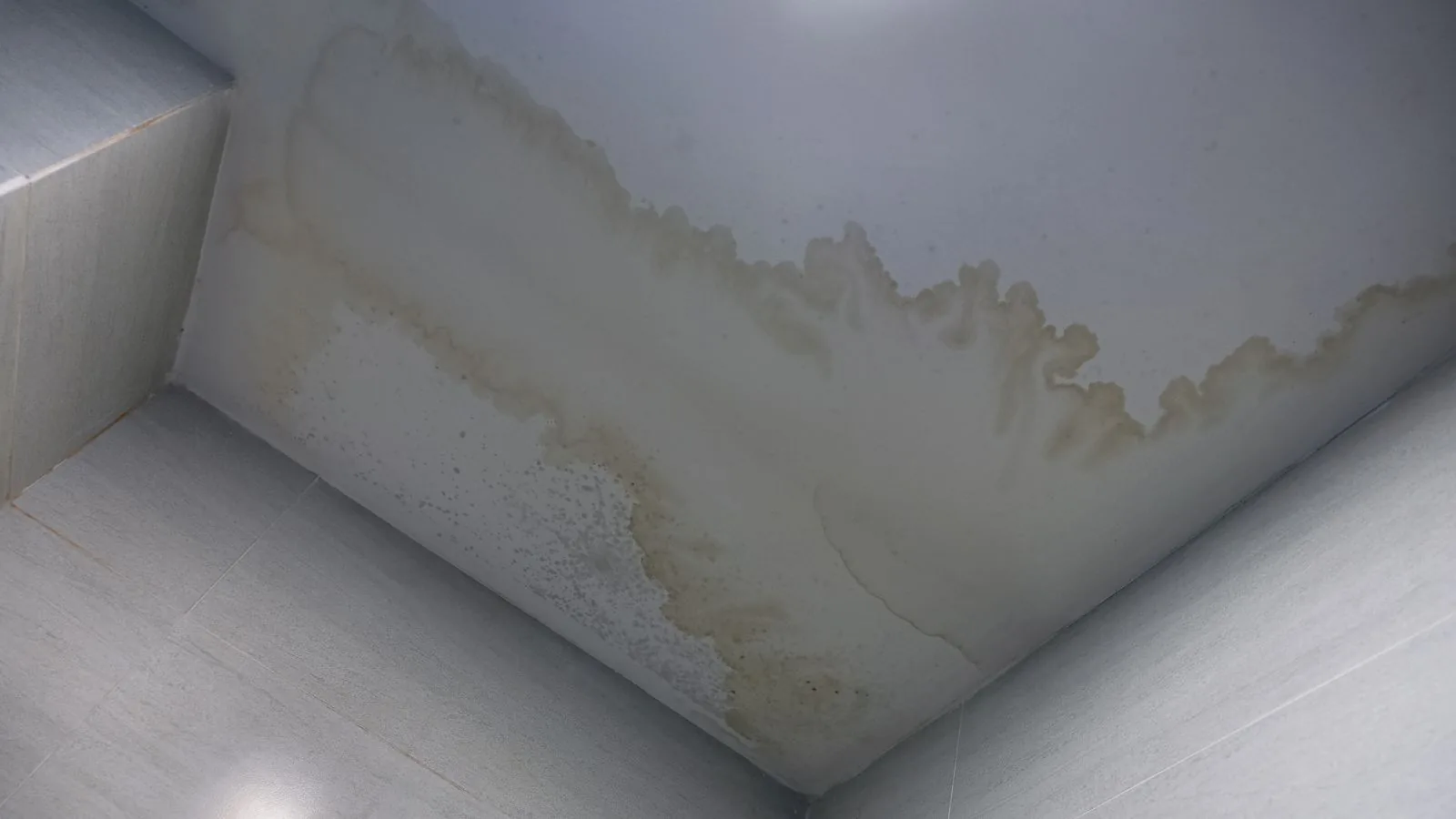
- A dry, brittle stain with sharp, hard edges.
- Multiple rings from repeated wetting.
- No change over months.
- Dry readings on a moisture meter.
- Stain colors that are dark brown with a faded center.
Old stains can still hide rot or growth behind them. A dry surface does not mean the structure behind it is sound.
| Sign | Active leak | Old damage |
|---|---|---|
| Surface | Damp, cool or soft | Dry and stiff. |
| Stain edges | Soft, still moving | Sharp rings. |
| Size over time | Growing | Unchanged. |
| Moisture reading | Higher than a dry reference | Same as a dry reference. |
| Smell | Fresh, musty | Faint or none. |
Cannot tell if a stain is active?
Call the emergency line and we will talk through readings.
How To Test
- Mark the edge of the stain with a pencil and date it.
- Check again in a day or two.
- Read the stain and a dry area with a moisture meter.
- Check above the stain for a bathroom, roof or pipe.
- Read your water meter with all fixtures off.
- If readings are higher than the reference, treat the area as active.
The water meter test is simple. Turn off all water, note the reading and check again after an hour. A change suggests a hidden leak. See burst pipe water damage for what to do if you find one.
Where To Look For The Source
- Above ceiling stains: bathrooms, roof penetrations and attic pipes.
- Behind wall stains: supply lines and drain lines.
- Near floors: appliances, toilets and tubs.
- At window sills: failed seals and flashing.
What To Do With An Old Stain
If readings are dry, you can seal the stain with a stain-blocking primer and repaint. Check again in a few weeks. If a stain returns, there is still moisture somewhere.
What A Professional Looks At
A trained eye reads several clues together. Stain color, edge shape, surface texture, nearby materials and moisture patterns all tell part of the story. A thermal camera can show whether the area behind a stain is cooler than the rest of the wall, which can indicate evaporation from active moisture.
The professional also asks about history. Has the roof been repaired? Did a pipe leak last year? A stain after a repair may be left over from before. A new stain after a storm may be active.
What Different Stain Colors Can Suggest
- Light tan or yellow rings: often clean water that has dried.
- Dark brown rings: repeated wetting or tannins from wood.
- Black spots: possible growth, which calls for a closer look.
- Gray or white powder: minerals left by moving water.
Color alone is not proof. Use it as one clue among several, and follow up with readings.
What To Do If You Cannot Tell
Treat it as active until proven otherwise. Check the stain daily, read it with a meter and look for the source. If the area stays dry for several weeks and no source is found, an old stain is likely. If readings are high or the stain grows, call for help.
Testing Over Time: A Simple Two-Week Method
- Mark the outline of the stain with a pencil and write the date beside it.
- Photograph it from the same spot, with a ruler for scale.
- Check again after three days, one week and two weeks.
- Read the area with a moisture meter each time and note the number.
- Record the weather, since rain and humidity change what you see.
If the stain stays the same size and the readings stay at the dry reference, the leak has most likely stopped. If any of those change, there is still a source to find.
Why Old Damage Still Deserves Attention
Even if a leak has stopped, the materials it soaked may have been damaged. Wood that stayed wet for months can lose strength. Insulation that was soaked can stay compressed and lose its value. Drywall can crumble at the paper face.
Probe suspicious wood gently with a screwdriver. If it sinks in easily, the wood is soft and needs repair. A restoration crew or a carpenter can tell you how far the damage goes and what should be replaced.
Documenting Old Damage For Insurance Or A Sale
If you plan to sell, buyers and inspectors will find old stains. Having a record of the cause, the repair and the dry readings builds trust. Keep receipts for the plumber or roofer and any readings taken afterward.
If you plan to claim, remember that insurers often limit coverage for long-term seepage. A clear record showing the leak was sudden and accidental, and that you acted when you found it, matters.
When a professional says an area is dry, the ANSI/IICRC S500 standard is the published reference behind that call. It describes drying goals based on a dry reading of the same material.
Why Wilsonville Homes Show Old Stains
Wilsonville grew in stages. The city says Charbonneau began in 1972, Old Town was planned in 2011 and Villebois in 2003, so a buyer or owner may inherit stains from several eras of construction.
Do not assume an old stain is harmless. Ask for any repair history and permits from the city's Building Division.
Sources: City of Wilsonville neighborhood planning and Building Division pages.
When To Bring In Help
If readings are high, if the stain is growing or if you cannot find the source, call a crew. See ceiling water damage repair for what repair involves. Homeowners in Sherwood and Canby use the same method.
Old Versus New Damage Questions
How can I tell if a water stain is old?
Old stains are dry and stiff, have sharp rings and do not change. Confirm with a moisture meter.
Can an old stain still be a problem?
Yes. Rot or growth can hide behind it even when the surface is dry.
How do I find a hidden leak?
Check the water meter with all fixtures off, scan with a moisture meter and look above and behind the stain.
Should I paint over a stain?
Only after confirming it is dry and the source is repaired.
Why does a stain return?
Moisture is still reaching the area, or the stain was not sealed.