

In this guide
- A Typical Range, And Why It Varies.
- What Controls Drying Time.
- The Four Basics Of Drying.
- Why A Surface Can Feel Dry But Not Be Dry.
- What Slows Drying At Home.
- What Homeowners Can Do While Waiting.
- How A Crew Decides It Is Dry.
- A Typical Drying Timeline, Day By Day.
- Materials That Dry Slowly.
- Why Equipment Placement Matters.
- What You Can Expect To See And Hear.
- When To Call.
A Typical Range, And Why It Varies
Many residential drying jobs take around three to five days of equipment time. Large losses, thick materials like hardwood and plaster or wet insulation can take longer. A small, quick-caught leak on drywall may dry sooner.
These are general figures. The only way to know is to measure. A crew checks readings daily and removes equipment when the goal is reached.
What Controls Drying Time
| Factor | Effect | Why |
|---|---|---|
| Amount of water | More water, longer drying | More moisture to remove. |
| Material | Dense materials dry slowly | Hardwood and concrete hold water. |
| Time before action | Delay lengthens drying | Water spreads and soaks in. |
| Air movement | More airflow, faster drying | Moves moisture off surfaces. |
| Humidity and temperature | Lower humidity, faster drying | Air can hold more moisture. |
| Category of water | Contaminated water needs removal | Materials may be discarded. |
The Four Basics Of Drying
- Extraction: remove standing water first.
- Air movement: air movers across surfaces.
- Dehumidification: pull moisture out of the air.
- Heat and temperature control: keep conditions steady.
Extraction removes most of the water in the first hours, so water extraction is the first step. Drying then removes what remains inside materials.
Water still in the house?
Call the emergency line. The sooner extraction starts, the shorter the drying.
Why A Surface Can Feel Dry But Not Be Dry
Surface touch is not a test. Wood, drywall and insulation can hold moisture deep inside. A moisture meter compares readings with a dry reference, and equipment stays until the goal is met. Our guide on wall and drywall water damage repair describes what happens when a wall does not dry.
What Slows Drying At Home
- Closed windows and closed doors with high humidity outside.
- Fans placed in one corner instead of across the surface.
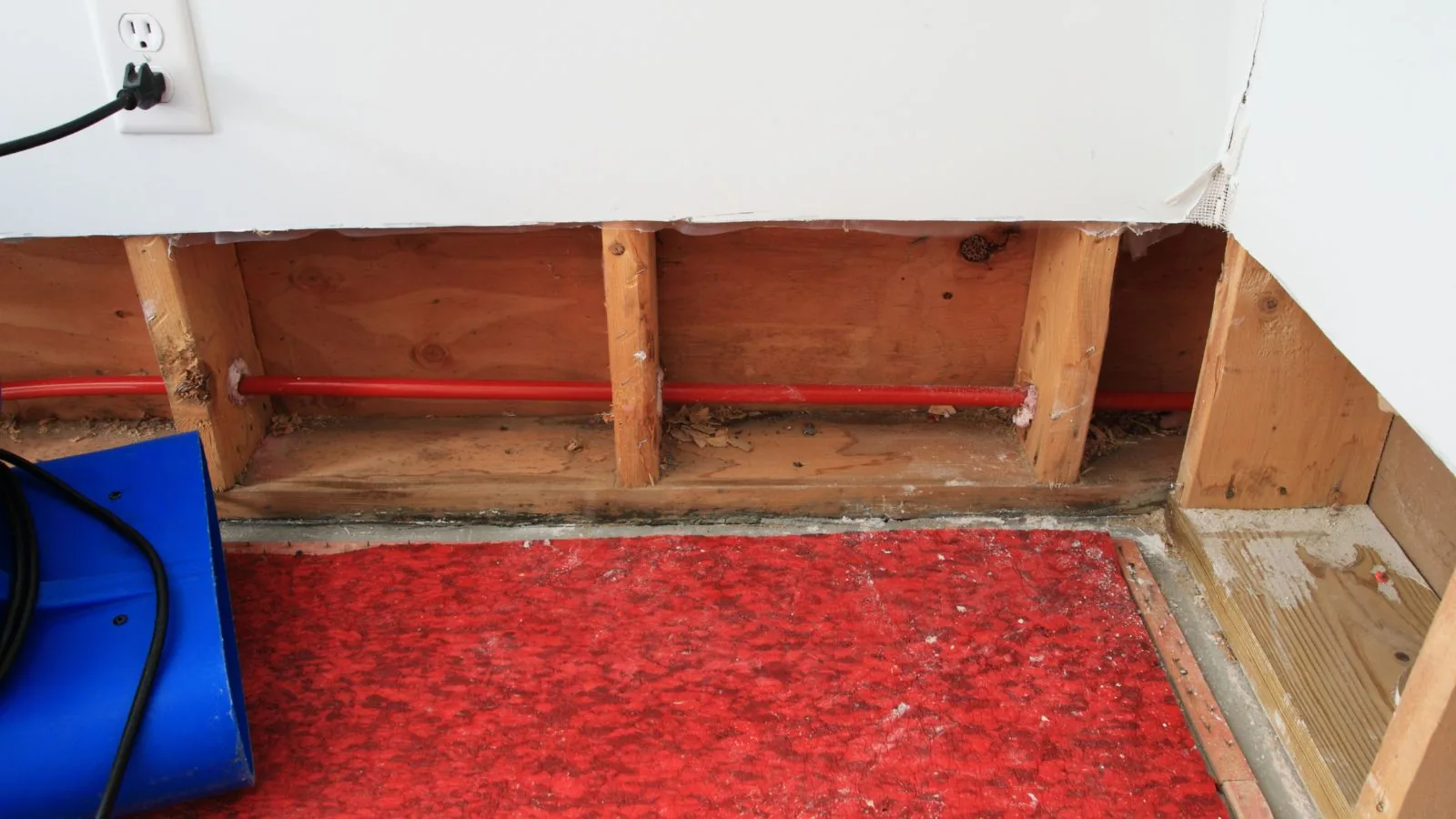
- Water behind baseboards, cabinets or under flooring.
- Insulation that stays wet.
- Cool rooms with little airflow.
What Homeowners Can Do While Waiting
- Keep furniture off wet floors.
- Open interior doors for airflow.
- Run a dehumidifier if you have one.
- Do not use heat guns or space heaters near wet materials.
- Log temperature and humidity once a day.
- Avoid covering wet surfaces with rugs or plastic.
How A Crew Decides It Is Dry
The ANSI/IICRC S500 standard describes drying goals based on a dry reference. The crew takes daily readings and records them in a log. Equipment is removed when readings reach the goal and hold steady. The log is useful for insurance.
A Typical Drying Timeline, Day By Day
- Day one: the source is stopped, standing water is extracted and equipment is placed.
- Day two: readings are taken, wet materials that cannot dry are removed and equipment is adjusted.
- Day three: readings are compared with the dry reference, and equipment is moved if some areas lag.
- Days four and five: most wet areas approach the goal, and a final reading confirms it.
- Final visit: equipment is removed, the log is completed and a copy is given to you.
This is a typical pattern, not a promise. Larger losses, hardwood floors and plaster can add days, and a dry spell in the weather can shorten them.
Materials That Dry Slowly
| Material | Speed | Why |
|---|---|---|
| Carpet | Fast once extracted | Open fibers release water easily. |
| Drywall | Moderate | Gypsum core holds water behind the paper. |
| Framing lumber | Slow | Dense wood releases moisture gradually. |
| Hardwood flooring | Slow | Boards absorb water and swell. |
| Plaster | Very slow | Thick and dense. |
| Concrete | Very slow | Holds moisture for weeks. |
Why Equipment Placement Matters
Air movers work best when they push air along the surface of a wall or floor rather than straight at it. Dehumidifiers must sit where they can pull moist air through the drying zone. A crew adjusts placement as readings change, which is why equipment moves between visits.
Closed rooms dry faster than open ones when a dehumidifier is working, because the equipment only has to handle the air in that space.
What You Can Expect To See And Hear
Drying equipment runs continuously and produces noise and heat. Air movers sound like loud fans, and dehumidifiers add warm, dry air to the room. Expect the house to feel warm and dry while equipment runs. Power use rises as well.
Plan for it. Keep pets and children away from equipment cords, and do not turn equipment off to rest from the noise. Short stops slow the process and can restart moisture problems.
Climate And Drying In The Willamette Valley
Western Oregon has a long wet season, so outdoor air can be damp in winter. Drying then relies more on dehumidifiers than on opening windows. In summer, warmer and drier air helps airflow-based drying.
The February 2021 ice storm showed how cold weather affects buildings. After freezing events, ceilings and walls can stay wet for days, and slow thaw can reveal leaks late.
Sources: National Weather Service Portland ice storm summary and Oregon storm reports.
When To Call
If a surface is still cool or damp after two days, or if you smell mustiness, call for readings. Waiting lets damage spread. Homes in Sherwood and Aurora follow the same timeline.
Drying Time Questions
How long does it take a house to dry after a leak?
Often around three to five days with equipment for a typical residential loss, though large losses and dense materials can take longer.
Can I dry a wet floor with fans alone?
Fans help the surface, but trapped moisture under flooring often needs dehumidification and monitoring.
How do I know when the structure is dry?
Moisture readings reach the drying goal set against a dry reference and stay steady.
Does cold weather slow drying?
Yes. Cold air holds less moisture, and dehumidifiers work better in controlled conditions.
Should I open windows to dry the house?
Only if outdoor air is drier than indoor air. In damp weather, closed rooms with a dehumidifier work better.