

In this guide
- Why Buyers Should Look For Water Damage.
- Start Outside The House.
- Inside: Ceilings, Walls And Floors.
- Under Sinks And Around Appliances.
- Ask The Seller These Questions.
- What A Moisture Meter And Camera Can Add.
- Your First Week After Closing.
- What To Do If The Seller Will Not Answer.
- When To Walk Away Or Negotiate.
Why Buyers Should Look For Water Damage
Water damage is one of the costliest surprises after closing. A stain painted over, a musty closet or a soft patch of floor can point to a leak that has run for years. Finding it before you buy gives you room to negotiate, ask for repairs or walk away.
A visual check does not replace a licensed home inspector, and it does not tell you the cause. It does help you decide where to ask questions and what to ask the inspector to focus on.
Start Outside The House
- Look at the grading and see whether soil slopes toward the foundation.
- Check that gutters are attached and downspouts discharge away from walls.
- Look for stains, bubbling paint or rot at the base of siding.
- Inspect the roof edge, chimney flashing and vents from the ground.
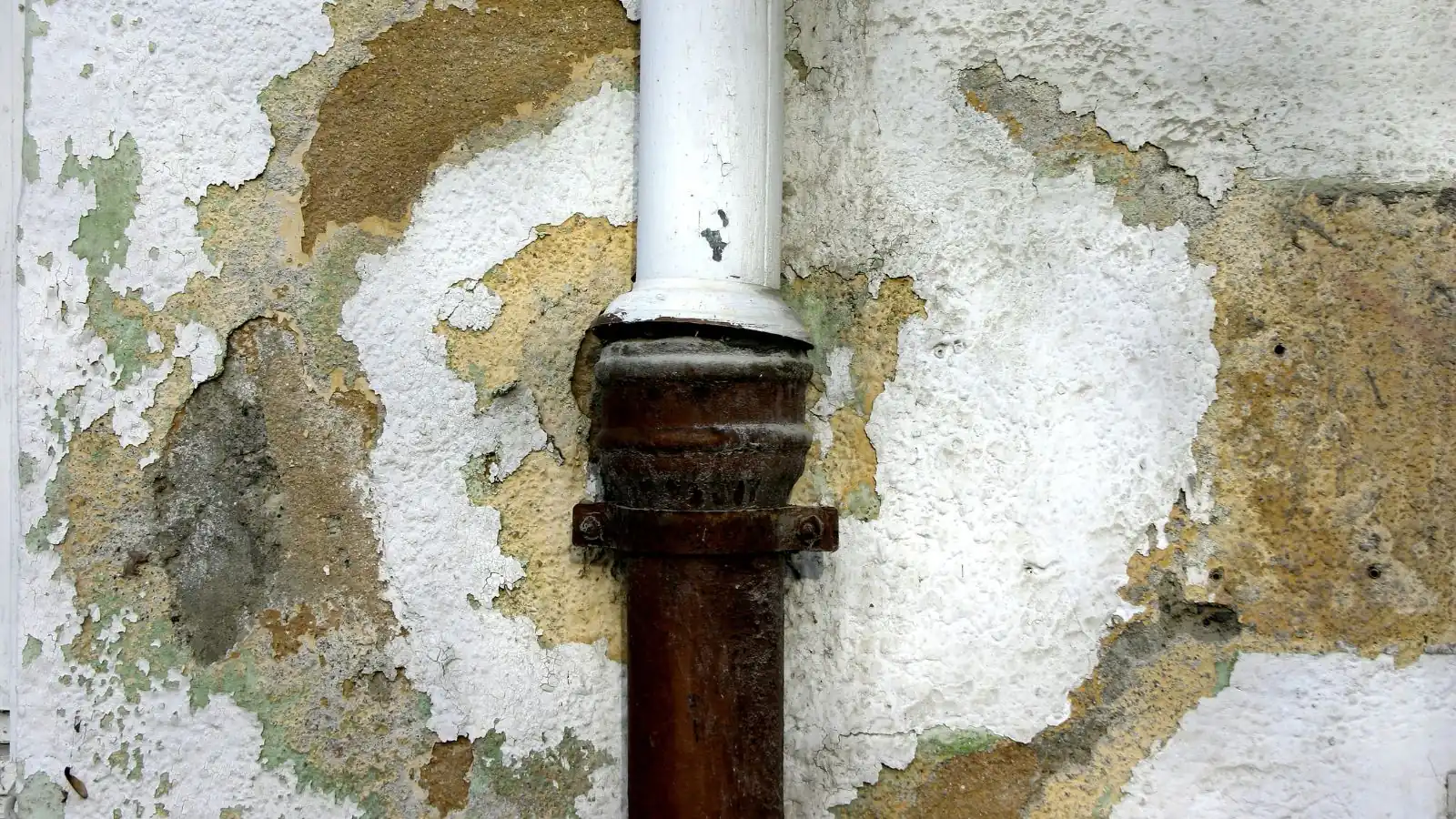
- Look for cracks in the foundation and efflorescence, the white powder left by moving water.
Soil that slopes toward the house and downspouts that empty against a wall are common reasons for wet crawl spaces and basements. Both are fixable, but they tell you how water has been behaving around the property.
Inside: Ceilings, Walls And Floors
Bring a flashlight. Look at ceiling corners and the area below bathrooms and roof penetrations for rings or stains. Run your hand along baseboards, and press on the floor near tubs, toilets and dishwashers. A spongy feel can mean a wet subfloor.
- Fresh paint on only one patch of a ceiling or wall.
- Warped or cupped hardwood or laminate.
- Loose or discolored tile and cracked grout around tubs.
- Peeling wallpaper or bubbling paint.
- Musty smell in closets, basements or cabinets.
- Rust on the water heater or pipes.
Under Sinks And Around Appliances
Open every cabinet under a sink. Look at the cabinet floor and the back wall for stains, swelling or new patches. Check the dishwasher, refrigerator ice maker line and washing machine hoses for corrosion, kinks or drips.
| What you see | What it may mean | Next step |
|---|---|---|
| Ring-shaped ceiling stain | Roof leak or plumbing above | Ask about roof age and repairs. |
| Cupped hardwood | Moisture from below or a past flood | Take moisture readings. |
| Musty smell in a closet | Damp wall or poor ventilation | Check the exterior wall and attic. |
| Soft floor near a toilet | Wax ring or supply line leak | Ask for a plumbing inspection. |
| White powder on foundation | Water moving through concrete | Look at grading and drainage. |
Seen something worrying in a home?
Call the emergency line to ask about moisture readings before you decide.
Ask The Seller These Questions
- Has the home ever had a water leak, flood or sewer backup?
- Were any insurance claims filed for water damage?
- When were the roof, water heater and plumbing last replaced?
- Has anyone repaired or painted over stains?
- Are there permits for plumbing, roofing or remodel work?
- Is there a sump pump, and has it ever run during storms?
Many states require sellers to disclose known defects. Ask for the disclosure in writing and compare it with what you see. A claim history report may also be available through the seller's insurer or your own agent.
What A Moisture Meter And Camera Can Add
A moisture meter shows whether a stain is wet now. A thermal imaging camera can show cool areas that suggest evaporation. Neither replaces testing by a qualified inspector, but together they help separate old marks from active leaks. Our structural drying page explains how professionals read and document moisture.
Your First Week After Closing
Once you own the home, run a short water audit before you unpack. Find the main shutoff and test it. Run every faucet and flush every toilet while you look for drips below. Check under every sink and behind the washer.
Take dated photos of anything that looks suspicious. If something turns out to be an undisclosed defect, those photos help you raise it with the seller or your insurer.
What To Do If The Seller Will Not Answer
Silence is information. If a seller refuses to discuss leaks, repairs or claims, put your questions in writing through your agent. Ask for permit records and invoices. If answers still do not come, factor that into your offer or your decision to proceed.
If a moisture problem turns up, the ANSI/IICRC S500 standard is the published guide that crews follow for drying goals. Ask any contractor whether the proposed work follows it.
Local Records Worth Checking In Wilsonville
The City of Wilsonville Building Division says a plumbing permit is required to replace a water heater or to alter piping inside a wall, ceiling or beneath a floor. Ask the seller whether such work was permitted, and ask the city for permit records if needed.
Wilsonville's Old Town plan was adopted in 2011 and Villebois's concept plan in 2003, so houses in different areas were built to different codes and ages. Charbonneau, south of the river, began in 1972.
Sources: City of Wilsonville Building Division and City of Wilsonville neighborhood planning pages.
When To Walk Away Or Negotiate
A single old stain with a documented repair is usually a small issue. Repeated stains, a musty smell with no explanation or a seller who cannot answer basic questions are reasons to bring in an inspector and ask for repair credits. If water damage is confirmed, get written estimates before closing.
Buyers in Sherwood, Canby and Aurora can use the same checklist. If you close and find damage after moving in, wall and drywall water damage repair describes what repair involves.
Home Buyer Water Damage Questions
What is the first sign of water damage when touring a home?
Often a stain, a musty smell or fresh paint on only one patch of a wall or ceiling. Follow up with a flashlight and a moisture meter.
Does a home inspection find all water damage?
No. An inspector reports what is visible and accessible. Hidden damage inside walls may not show without testing.
Should I ask the seller about past claims?
Yes. Ask about leaks, floods, sewer backups and insurance claims, and ask for the disclosure in writing.
Can fresh paint hide water damage?
Yes. Paint on one patch of ceiling or wall is a reason to ask what was repaired and why.
What if I find damage after closing?
Document it, notify your insurer if relevant and call a restoration crew for readings and drying.